
Quality is not Overhead
Early in my tenure at a new organization, I encountered a telling moment that reflects a common mindset in healthcare and life sciences. Three days into the role, I met the CEO in the elevator and introduced myself. He immediately recognized me as the newly hired and, in his words, highly paid “quality overhead,” brought in to help turn around the Quality function.
Two months later, we met again under very different circumstances. This time, the discussion focused on how Quality could proactively modernize the company’s operating model by introducing practical tools that accelerate product development and commercialization rather than slowing it down. What became evident in my first weeks was that the organization did not suffer from “too much” Quality, but from the absence of business-centric quality processes.
The challenges surfaced as products moved through development without clearly defined deliverables, roles, or accountability. By establishing clear responsibilities and phase-appropriate deliverables across the development lifecycle, teams were able to work cross-functionally with shared objectives. Quality became an enabler of execution rather than a downstream checkpoint. As a result, the CEO evolved from viewing Quality as overhead to recognizing it as a core contributor to Product Lifecycle Management, supported by meaningful metrics and management-ready insights.
Quality should not function as a policing organization or a cost center. When positioned correctly, it is a strategic business partner, using familiar, disciplined tools to promote proactive risk management rather than reactive compliance. In this case, straightforward root-cause analysis revealed that the issue was not laboratory performance, but poorly defined expectations during technology transfer from pilot operations to commercial manufacturing, including testing and validation requirements.
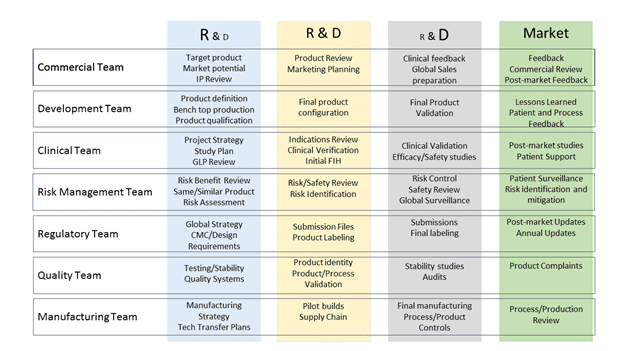
Implementing a phased, lifecycle-based approach to deliverables enabled each function to prepare for both near-term execution and long-term scalability. The outcome was reduced cycle time, earlier visibility of “at-risk” programs, and more effective management review and decision-making, as shown in this high level process:
Healthcare executives facing similar challenges can learn from this transformation. To explore how business-driven Quality can accelerate development while protecting patients, visit:
https://consultwing.com/product-development-tplc/
At Consult Wing, we help organizations align, achieve, and sustain. Contact us for further information and support.